
What is the “Fake” in Art and Cinema?

Fake!, book cover. F for Fake, poster.
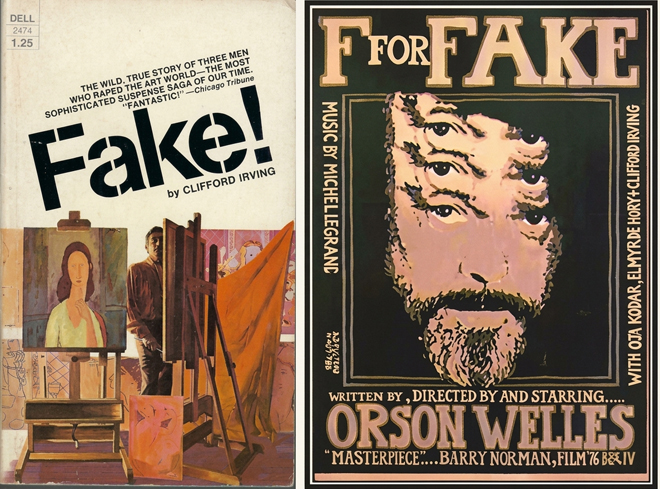
Fake!, book cover. F for Fake, poster.
Between technical mastery and fraud lies a fine line where the lie becomes myth. Moving through this no-man’s-land are three emblematic figures of the twentieth century: Elmyr de Hory, the genius forger; Clifford Irving, the writer who chronicled his life only to surpass him in deception; and Orson Welles, the director who transformed their parables into a brilliant reflection on art and illusion.
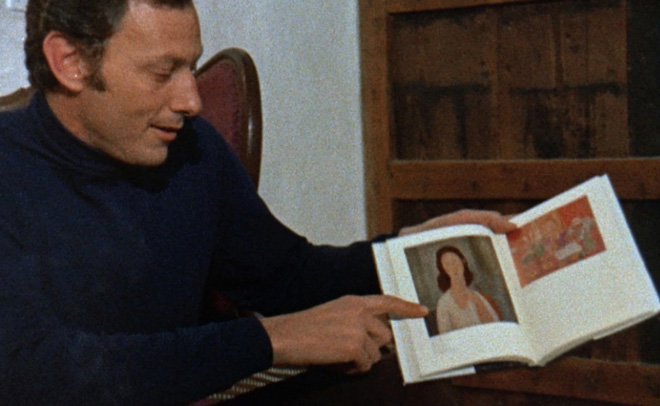
F for Fake, film fram.
It all begins between postwar Paris and the silence of a villa in Ibiza. Elemér Albert Hoffmann (1906–1976) — known professionally as Elmyr de Hory — was a highly talented Hungarian painter who was nevertheless unable to make a name for himself under his own identity. Driven by necessity and resentment toward an unhearing critical establishment, de Hory grasped a staggering truth: to deceive the world, one did not need to copy a painting; it was enough to evoke its soul. Creating canvases from scratch “in the style of” Modigliani, Picasso, Matisse, or Cézanne, he introduced over a thousand counterfeit works into the market. His fakes ended up in the most prestigious museums, accompanied by authentications from the experts of the time. De Hory thus laid bare the dogma of originality: if a canvas radiated the same poetic charge as a Modigliani, why was it worth millions with a signature at the bottom and zero without it?

F for Fake, film fram.
Unveiling his story was Clifford Irving (1930–2017) in the 1969 essay Fake!. The book was an overwhelming success, portraying the forger as a romantic hero and ridiculing the greed of the market. But the story took a surreal turn when Irving himself put his subject’s lesson into practice. A few years later, the writer fabricated a fake The Autobiography of Howard Hughes: Confessions of an Unhappy Billionaire, selling the rights for dizzying sums before being exposed and convicted. The biographer had become a mirror of his subject: the narrator had turned into a lie.

F for Fake, film fram.
This short circuit could not escape Orson Welles (1915–1985) — the director who, as early as 1938 with the famous radio hoax The War of the Worlds, had demonstrated the shaping power of fiction. Editing archival footage of de Hory and Irving, Welles created the 1973 essay-film F for Fake. Presenting himself not as a documentarian but as an “honest charlatan,” the director promises the viewer an hour of pure truth, only to devilishly deceive them with a fabricated story about Picasso and admit to the hoax only at the end.
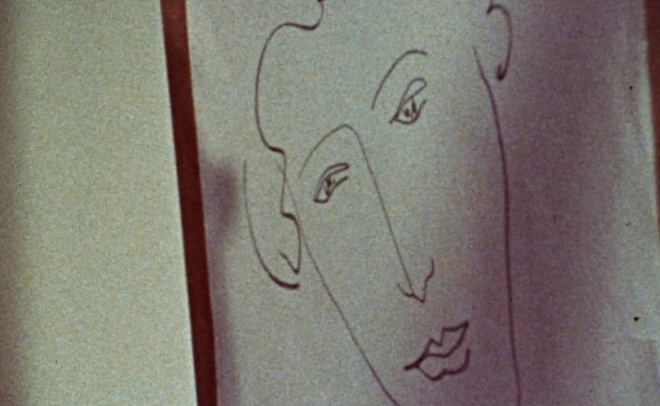
F for Fake, film fram.
From this confrontation among painting, literature, and cinema emerges a profound lesson. In the figurative arts, value has untethered itself from intrinsic quality to anchor itself to the signature and the financial brand: if the fake sparks the same emotion as the original, the fraud lies not in the brushstroke, but in the economic contract. In cinema, by contrast, the fake is the raw material of all creation: an illusion made of light, editing, and acting. Welles summarizes this by quoting Picasso: “Art is a lie that makes us realize truth.”

F for Fake, film fram.
In his moving final monologue in front of Chartres Cathedral, Welles recalls that one of humanity’s most majestic monuments is entirely anonymous: no one knows the names of the architects or stonemasons who built it. The contemporary obsession with authorship, labels, and market value has ultimately corrupted our ability to enjoy the work in itself. The intertwined parables of Elmyr de Hory, Clifford Irving, and Orson Welles thus leave us with a provocative and profoundly relevant legacy: art is not authentic because it is free from deception, but because deception itself, when guided by mastery and imagination, becomes the highest and purest form of truth.