
Klaus Schmidt: First faith, then the city, and finally civilization
by Nicola Desiderio on October 29, 2026
The famous insight of German archaeologist and prehistorian Klaus Schmidt (1953–2014) — summarized in the phrase “first came the temple, then the city” — revolutionized our understanding of the origins of civilization. For decades, the classical paradigm held that agriculture drove humans toward sedentism, giving rise to the city and, only later, to places of worship. The discovery of the megalithic sanctuary of Göbekli Tepe (dating back roughly 12,000 years) in Şanlıurfa, southeastern Turkey, very close to the Syrian border, proved the exact opposite: it was erected by groups of nomadic hunter-gatherers, driven not by material calculations, but by a shared spiritual vision.
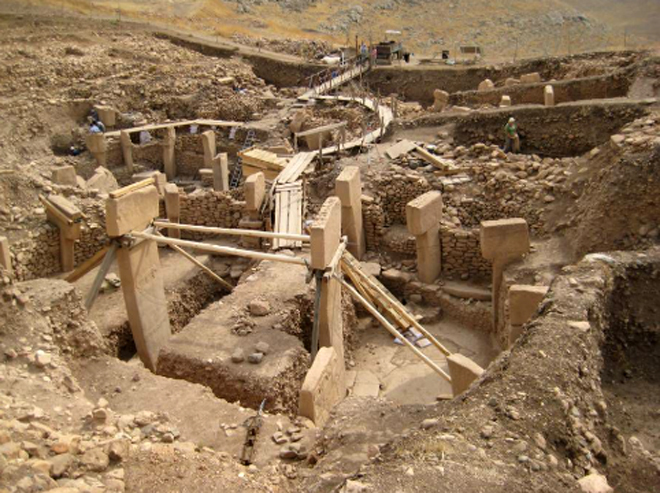
© Jean-Paul Demoule I Göbekli Tepe.
Ritual needs, myth, and the desire for gathering were the true driving force behind large-scale cooperation. To build and visit the temple, hundreds of individuals began congregating in the same place, creating the need for a settled and centralized food source; it was precisely this communal impulse centered around the sacred that spurred the domestication of plants and animals, giving rise to agriculture and the first permanent settlements. Although it is within the city that the very concept of civilization takes shape, its first foundational stone was not economic, but metaphysical. Humans did not come together merely as economic or biological animals, but first and foremost as homo religiosus: it was worship that founded the community, transforming transient places of devotion into history’s first true urban centers.
Archives
Recent Posts
- Klaus Schmidt: First faith, then the city, and finally civilization
- Arbour house and the contemporary coffered ceiling for an unprecedented domestic organism
- What is the “Fake” in Art and Cinema?
- Beyond the veil of reality: Fiction unmasked by Federico Fellini and David Lynch
- Between memory and alpine horizon: Stone House