
For the children of Kamwokya, every chess move is a step toward freedom
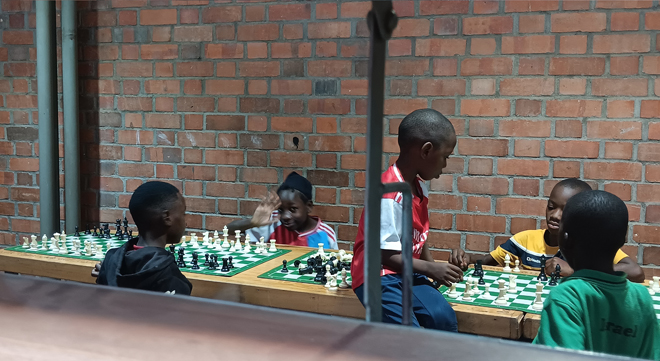
© arcomai I Chess class at Kamwokya Community Centre.
In a context like Kamwokya, a slum on the outskirts of Kampala where streets are narrow, houses are packed together, and daily life swings between precariousness and an extraordinary community energy, teaching chess to children goes far beyond a simple game. It is a poetic act and a moment of reflection, if not a political choice altogether: a way to open up oases of calm and concentration inside a noisy, dangerous, unstable environment marked by deep social and environmental challenges. The stage for this transformation is the Kamwokya Community Centre. Designed by Kéré Architecture to offer a safe space dedicated to sports, music, and education, the centre has become the natural place to introduce chess to the youngest ones. Lessons are held in the large hall used as a gym: an empty space that fills with silence, learning, and focus. This is where the game takes shape.
For many children, the chessboard is a revelation: 64 perfectly ordered, stable, geometric squares. A stark contrast to the informal urban layout of the neighborhood. Yet, even the slum is a chessboard in its own way: a territory to navigate by carefully choosing every move among a thousand variables. To teach the game, the pieces become characters in an urban fairytale: the cautious king, the lightning-fast queen, the acrobatic knights, and the small pawns that, by advancing bravely, can transform and change their own destiny. Through metaphors tied to everyday life, the children not only learn the rules, but also develop critical thinking and strategic vision. In a place where tomorrow is often an unknown variable, this ancient game of strategy is transformed in their hands into a daily exercise of freedom.
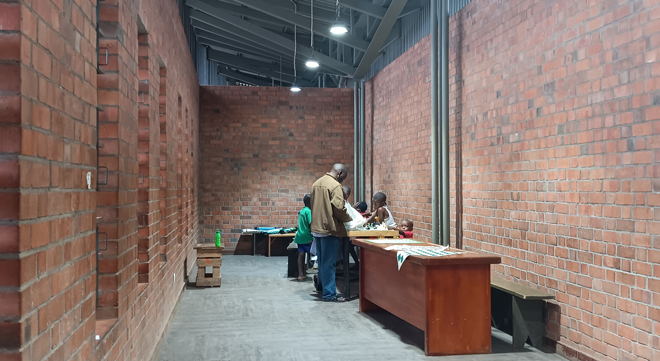
© arcomai I Chess class at Kamwokya Community Centre.